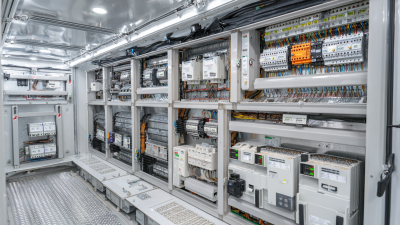
Hey, have you noticed how quickly the power distribution scene is changing these days? There’s a huge rush to find smarter, more efficient solutions, and one thing that’s been gaining a lot of attention is Low Inductance Busbars. These things are actually a game-changer when it comes to boosting energy transfer and making systems run smoother. Did you see the 2023 Global Electrical Distribution Report? It mentions that tuning the inductance can bump up efficiency by as much as 30%. That’s pretty significant, right?
David Johnson from PowerTech Innovations, who’s kind of an authority in this space, puts it simply: “Low Inductance Busbars cut down on energy loss and make the whole system more reliable.” Seriously, in busy places like data centers or renewable energy setups, where power distribution is critical, improving efficiency isn’t just a nice-to-have — it can actually save a boatload on operational costs.
Of course, it’s not all easy sailing. Installing and designing these busbars isn’t without its hurdles. Sometimes, engineers struggle with integrating them properly, which can lead to uneven performance. As things move forward, figuring out how to iron out these issues is going to be key if we really want to get the most out of this innovative tech. Striking the right balance between cost, reliability, and efficiency is going to shape what power distribution looks like in the future.
Low inductance busbars play a crucial role in modern power distribution systems. Their design minimizes resistive losses and improves efficiency. According to a recent industry report, well-designed busbars can decrease energy losses by up to 30%. This reduction translates into significant cost savings. Furthermore, low inductance solutions effectively handle higher current loads without overheating.
The importance of these busbars extends to safety. High inductance can lead to voltage spikes and irregular power delivery. An industry study highlighted that nearly 20% of electrical failures stem from poor busbar design. This emphasizes the need for rigorous testing and standardization. Additionally, the environmental impact should not be overlooked. Efficient power distribution using low inductance busbars can reduce carbon footprints, contributing to greener initiatives.
However, not all busbar systems are created equal. Manufacturers often face challenges in materials selection and thermal management. Improperly implemented approaches can lead to inefficiencies. One report noted that subpar designs often suffer from overheating issues, which may compromise their lifespan. Continuous innovation is necessary in this field to overcome these obstacles and enhance overall performance.
In the pursuit of efficient power distribution, low inductance busbars are vital. Their design directly impacts performance. Key characteristics must be examined.
High conductivity materials, such as copper or aluminum, reduce energy loss. The choice of material influences temperature rise, which can affect overall system efficiency.
Effective busbars often feature an optimized geometric design. This minimizes inductive effects and resistance. Reports highlight that well-designed busbars can reduce energy losses by up to 20%. Additionally, proper thickness and spacing can enhance thermal management. However, achieving the perfect design requires careful balance. Overly thick busbars may lead to unnecessary weight and cost.
Another consideration is the installation environment. High humidity or extreme temperatures can impact performance. Regular maintenance is also crucial. Buildup of contaminants can increase resistance over time. Thus, while striving for optimal designs, ongoing evaluation is vital. Busbar effectiveness hinges on continual assessment and adaptation.
The evolution of busbar technology is crucial for improving power distribution. One key improvement is the shift towards materials with lower inductance. This reduces energy loss and enhances efficiency. Materials like copper and aluminum are being optimized for better performance.
New designs incorporate innovative cooling techniques. These techniques prevent overheating and minimize power loss. Many systems now feature advanced thermal management. This ensures that the busbars operate at optimal temperatures. However, achieving the perfect balance between performance and cost remains a challenge.
Sustainability also plays a role in the development of busbars. Companies are exploring eco-friendly materials. The aim is to reduce the environmental impact of manufacturing. Yet, not all solutions are viable for every application. Consideration of factors like scalability and long-term durability is essential. The search for the best low inductance solutions continues, pushing the boundaries of technology.
When considering low inductance busbars, material choice plays a critical role. Copper and aluminum are popular materials due to their excellent electrical conductivity. According to a report by IEEE, copper has a conductivity of 58 MS/m, while aluminum's conductivity stands at about 37 MS/m. This difference can significantly impact efficiencies in power distribution systems.
Copper’s higher conductivity means that it can carry more current with less resistance. However, it is more expensive than aluminum. Many industry experts argue that this cost difference needs careful consideration. In applications where space is limited, aluminum’s lower density offers an advantage. It can reduce the overall weight of the busbar system.
However, not all applications may benefit from aluminum. Its higher inductance compared to copper can lead to issues in high-frequency operations. A study from the International Journal of Electrical Engineering concluded that inductance increases in aluminum busbars could result in power losses of up to 15%. Careful analysis of operational requirements is essential. Choosing the right material is not just a matter of cost, but also of performance and system reliability.
This chart compares the inductance values of various materials commonly used for low inductance busbars. The data highlights the differences in performance based on material choice.
Low inductance busbar solutions are becoming vital in modern power distribution systems. These systems require efficient operation with minimal power losses. According to a report by the International Electrotechnical Commission, improper busbar design can lead to energy losses of up to 15%. In contrast, low inductance designs can improve efficiency by as much as 20%. This significant gain showcases their importance in high-performance applications.
These solutions are widely used in various industries, including data centers and electric vehicles. In data centers, minimizing inductance ensures rapid signal integrity and reduces heat generation. This is critical as equipment density increases. The global market for low inductance busbars is projected to grow at a compound annual growth rate of 8.5% from 2023 to 2030. However, implementing these systems is not without challenges. Engineers must carefully consider installation and maintenance aspects. A poorly executed installation can negate the benefits of low inductance.
The benefits of low inductance busbars are compelling, but reality can be complex. Adapting these systems to existing infrastructure may require additional investments. Some applications may also face space constraints. The balance between performance and practicality must be acknowledged. This reflection prompts questions about long-term sustainability and cost-effectiveness in evolving markets.
Implementing low inductance busbars presents several challenges. One major issue is the complexity of design. Engineers must create busbars that minimize inductance while maintaining structural integrity. This process often requires advanced simulation tools. These tools can be costly and time-consuming.
Another challenge is manufacturing precision. Low inductance busbars need tight tolerances. Any deviation can impact performance. Achieving these tolerances can strain production resources. It often leads to increased costs and longer lead times.
Finally, installation can pose its own set of obstacles. Proper placement and support for busbars are crucial. Misalignment can result in increased inductance and power loss. Training personnel becomes essential. Without knowledgeable staff, installation errors can occur, leading to inefficiency. Addressing these issues is vital for effective power distribution.
The landscape of power distribution is rapidly evolving. Future trends point towards innovations in busbar technology. Low inductance busbars promise to enhance efficiency significantly. They minimize energy loss during transmission. This aspect is crucial as energy demands continue to escalate. Manufacturers are exploring new materials and designs. The goal is to improve heat dissipation and overall performance.
One emerging concept is modular busbars. They offer flexibility in various applications. This adaptability can lead to more efficient layouts. However, these solutions often come with challenges. For instance, installation can become complex. Maintenance requirements may increase due to their modular nature. Engineers must consider these factors when designing systems.
Another area of development is smart busbars. Integrating sensors can provide real-time data on performance. However, this technology is still in its infancy. Issues surrounding data security and reliability persist. There is a long way to go before fully realizing its potential. As engineers and researchers collaborate, the future of power distribution looks promising yet complicated.
: Low inductance busbars are designed for efficient power distribution with minimal energy losses.
It helps improve efficiency, reducing power losses. It can enhance performance by up to 20%.
They are widely used in data centers and electric vehicles, among others.
Space constraints can complicate installation and integration into existing systems.
They need to balance minimizing inductance and ensuring structural integrity effectively.
Poor installation can negate efficiency gains. Proper alignment is crucial for performance.
Achieving tight manufacturing tolerances requires precision and can strain production resources.
Knowledgeable staff prevent installation errors and ensure efficient operation.
They help optimize designs but can be costly and time-consuming to use.
Adaptations to existing infrastructure may require significant additional investments.
The article "2026 Best Low Inductance Busbar Solutions for Efficient Power Distribution" provides a comprehensive overview of the significance of low inductance busbars in modern power distribution systems. It highlights the key characteristics that make efficient busbar designs crucial for reducing energy losses and improving performance. The article also explores the latest technologies that enhance busbar performance, such as advanced materials and innovative engineering practices.
Moreover, it compares various material choices for low inductance busbars, discussing their advantages and applications in different sectors. The benefits of adopting low inductance busbar solutions are outlined, alongside the challenges faced in their implementation. Lastly, the article delves into future trends in power distribution, emphasizing the continued evolution and innovation of low inductance busbars to meet the growing demands for efficient and reliable power systems.