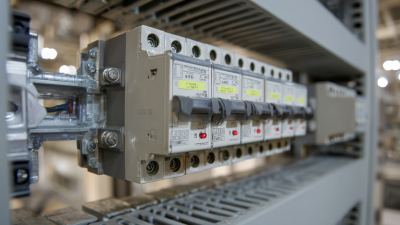
China has really become a go-to place for sourcing electrical bars—those are the components used in power distribution, industrial gear, and renewable energy setups. This guide is here to help you find trustworthy Chinese manufacturers and suppliers, focusing on things like product quality, engineering skills, and their experience with exports.
Electrical bars come in various types—copper busbars, aluminum ones, laminated, and insulated versions. Each kind has its own specs for current capacity, temperature handling, and installation needs. When you're checking out suppliers, it's important they can provide clear details about the materials, size tolerances, surface finishes, and electrical performance. Plus, their factory experience counts—that means seeing if they have proper production lines for cutting, bending, punching, plating, insulation, and quality checks.
Honestly, sometimes it's the little things that make all the difference.
When evaluating suppliers, make sure to look into their ISO 9001 certifications, relevant IEC standards, test reports, and records of raw materials. Asking for samples is a great idea too—it can help spot issues like burrs, uneven plating, poor insulation, or holes that are off where they should be. These might seem like small problems but can lead to delays during installation or even bigger safety hazards. Don't forget to review their technical drawings, packaging, delivery timelines, and after-sales support—these aspects are super important too.
And here’s a tip—just because a quote is low doesn’t mean you'll actually save money in the end. Hidden costs like tooling, mold ownership, shipping protection, or repeated testing can add up. Also, some suppliers might be quick to respond before you place an order but slow afterward, which can be annoying—so keep an eye on that.
Of course, this article can’t cover every factory or project out there. As a buyer, you really need to do your own due diligence—verify claims, compare a few trusted suppliers, and don't just go with the first bargain you find.
With some solid screening, good documentation, and a bit of patience, you'll be better equipped to find reliable Chinese manufacturers for electrical bars that will keep your projects running smoothly and efficiently over the long haul.

What Are Electrical Bars and How Are They Used?
Electrical bars, commonly called busbars, are rigid conductors that distribute power inside switchboards, control panels, transformers, and data centers. They are usually made from copper or aluminum, then cut, drilled, insulated, or plated for specific applications. Unlike many cable bundles, a busbar creates a short, organized current path. This can reduce installation space and simplify maintenance.
The IEA’s Electricity 2024 report estimates that data centers, artificial intelligence, and cryptocurrency operations used about 460 TWh of electricity globally in 2022. Their demand could exceed 1,000 TWh by 2026. That growth increases the need for compact, high-current distribution systems. In practice, engineers select bars by current rating, temperature rise, short-circuit withstand, enclosure design, and connection method. A bar that looks oversized may still be unsuitable if ventilation is poor.
Renewable projects add another pressure point. IRENA reported 473 GW of new renewable capacity in 2023, bringing global renewable capacity close to 3,870 GW. Solar inverters, battery cabinets, and collection panels often rely on busbars to move high currents safely. Copper offers strong conductivity, while aluminum can reduce weight and material cost. The choice is not automatic. Joint oxidation, thermal expansion, bending accuracy, and bolt torque deserve careful checking. Small installation errors can create hot spots. Real projects sometimes reveal that drawings were too optimistic. That is worth reviewing before production.
Key Types of Electrical Bars Made in China
China Top Electrical Bars Manufacturers and Suppliers
Key Types of Electrical Bars Made in China
China produces several electrical bar types for switchboards, transformers, battery systems, and industrial control cabinets. Rigid copper busbars remain popular because they offer strong conductivity and stable heat performance. Aluminum bars reduce weight and material cost, but they need careful joint treatment. Plated bars use tin or nickel surfaces to improve contact reliability in humid or corrosive environments. Common shapes include flat, rectangular, tubular, and custom-machined profiles.
Laminated busbars combine conductive layers with insulation films. They help shorten wiring paths and reduce stray inductance in power electronics. Flexible copper braids handle vibration and frequent movement better than solid bars. Some suppliers also provide punched, bent, drilled, or coated bars for direct cabinet installation. In practical sourcing, I check edge quality, hole alignment, surface finish, and insulation thickness. Small defects can create difficult assembly problems. A perfect drawing does not guarantee a perfect part.
Tips: Confirm the required current, voltage, temperature rise, and installation space before requesting quotations. Ask for material certificates, dimensional reports, and sample testing. Review the plating thickness, bend radius, and burr control. Do not select only by price. A cheaper aluminum bar may require larger dimensions or stronger connection hardware. Supplier communication can also fail when drawings lack tolerances. Clear specifications prevent that.
China Top Electrical Bars Manufacturers and Suppliers – Key Types of Electrical Bars Made in China
This chart compares the reference electrical conductivity of common electrical bar materials and surface-finish types. Annealed copper is rated at 100% IACS, while electrical-grade aluminum is approximately 61% IACS. Tin-plated and silver-plated copper bars retain a copper conductive core; plating is mainly used to improve corrosion resistance, contact performance, or oxidation protection. Actual busbar capacity depends on cross-sectional area, temperature rise, installation method, and enclosure design.
Main Materials and Performance Standards
China Top Electrical Bars Manufacturers and Suppliers
Main Materials and Performance Standards
Electrical bars, often used as busbars, are commonly made from high-conductivity copper or aluminum. Copper offers strong conductivity and better mechanical strength in compact equipment. Aluminum weighs less and can reduce transport and installation loads. However, its larger cross-section may be necessary for equal current capacity. Material certificates should show chemical composition, conductivity, tensile strength, and dimensional results.
Surface treatment also affects service life. Tin plating can reduce oxidation at connection points and improve contact stability. Insulating coatings may use epoxy powder or heat-shrink materials, depending on voltage and operating conditions. In a real inspection, check coating thickness, edge coverage, adhesion, and visible pinholes. Small defects matter. They can become larger problems under heat, moisture, or vibration.
Reliable suppliers should provide routine and type-test evidence, not only attractive catalog data. Relevant assessments may include IEC 61439 for low-voltage assemblies, IEC 60664 for insulation coordination, and applicable ASTM or EN material standards. Key performance checks include temperature rise, short-circuit withstand, dielectric strength, insulation resistance, and resistance at joints. Test values should match the finished bar, not merely the raw material. This detail is sometimes overlooked. Design calculations should also consider ambient temperature, enclosure ventilation, tightening torque, and repeated thermal cycling. A bar that passes in a cool laboratory may perform differently inside a crowded cabinet. Suppliers with traceable production records, calibrated instruments, and clear corrective-action procedures offer stronger technical reliability.
How Chinese Manufacturers Design and Produce Electrical Bars
China Top Electrical Bars Manufacturers and Suppliers
Chinese electrical bar manufacturers usually begin with load data, not a fixed product size. Engineers calculate current density, temperature rise, short-circuit withstand, and available cabinet space. Copper or aluminum profiles are then extruded, rolled, or cut to controlled dimensions. CNC punching creates connection holes, while automated deburring removes sharp edges. Small defects matter here.
The International Energy Agency’s Electricity 2024 report expects global electricity demand to rise by about 4% annually from 2024 to 2026. This growth increases demand for compact, reliable distribution equipment. Manufacturers respond with laminated bars, flexible connectors, and insulated busbar assemblies. Insulation thickness, creepage distance, and heat dissipation are checked against IEC 61439-6 requirements for busbar trunking systems. Some factories also use finite-element analysis before producing samples.
Production quality depends on more than machinery. Technicians inspect plating thickness, flatness, hole alignment, and contact resistance. Routine tests may include dielectric strength, temperature-rise, and short-circuit verification. Independent laboratories can validate these results, improving buyer confidence. However, not every supplier publishes complete test records. That weakness deserves attention.
Experienced buyers should request material certificates, dimensional drawings, process photos, and recent test reports. They should also compare actual operating conditions with laboratory ratings. A polished surface is not proof of performance. Sometimes, basic inspection reveals more than a long specification sheet.
Quality Control and Certification Requirements
Reliable electrical bar manufacturers and suppliers treat quality control as a daily discipline, not a final inspection. They verify copper or aluminum grade, dimensions, flatness, surface finish, and plating thickness. Each batch should carry traceable material records. This helps engineers investigate failures quickly.
Testing should reflect real installation conditions. Inspectors measure electrical resistance, temperature rise, insulation performance, and mechanical strength. Samples may undergo thermal cycling, vibration, corrosion exposure, and torque checks. Certification requirements depend on the product design and target market. Relevant IEC standards, accredited laboratory reports, and an ISO 9001 quality system can strengthen supplier credibility. However, ISO 9001 alone does not certify product safety. That distinction is often missed.
Tips: Request a current test report, material certificate, calibration record, and inspection plan. Check whether the laboratory is properly accredited. Confirm marking, packaging, and dimensions before shipment. A clear drawing prevents expensive misunderstandings.
Experienced suppliers also maintain corrective-action records. They should explain what happened, why it happened, and how recurrence is prevented. No factory is flawless. A weak answer is more concerning than a small defect. Some suppliers still focus on polished certificates while overlooking burrs, uneven plating, or loose packaging. Buyers should audit samples, compare measured results with specifications, and record acceptance criteria before production. This practical habit supports safer, more reliable electrical bar sourcing.
How to Select a Reliable Chinese Supplier
Selecting a reliable Chinese electrical bars supplier requires more than comparing unit prices. Define the required material, dimensions, conductivity, plating, temperature rise, and packaging before contacting factories. Copper and aluminum bars may look similar, but their performance differs under heat and continuous load. Request technical drawings, material certificates, inspection records, and traceability documents. A serious supplier should provide clear answers, not vague promises. Ask for samples produced with the same equipment and process used for mass production.
Tips:
Request at least two samples and test them under realistic operating conditions. Verify the company’s legal registration, factory address, production capacity, and export experience. A video tour helps, but it cannot replace independent inspection. Ask who controls tooling, raw materials, and final testing. Review tolerances, delivery schedules, replacement terms, and packaging details in writing. A polished presentation is not proof. Factory audits can also miss problems, especially during busy production periods.
Choose suppliers that explain technical limits honestly. They should discuss surface defects, bending risks, insulation needs, and acceptable tolerances. Ask for test methods and calibrated equipment records. For larger orders, consider a pre-shipment inspection by an independent engineer. Keep approved samples, drawings, and communication files together. Small misunderstandings about hole spacing or bar thickness can create expensive installation delays. Do not reward confidence alone; reward evidence, consistency, and responsive technical support.
Buying, Customization, and Export Considerations
Buying electrical bars requires more than comparing copper prices. Busbar demand is rising with data centers, renewable power, and industrial electrification. The IEA Electricity 2024 report projects global electricity demand will grow by an average of 3.4% annually through 2026. This growth increases pressure on manufacturers and suppliers to provide stable conductivity, precise dimensions, and dependable delivery. Ask for material certificates, resistance data, temperature-rise tests, and production samples. A useful sample should show clean edges, consistent hole spacing, and uniform plating. Check whether the supplier uses copper or aluminum for your current, weight, and installation conditions.
Customization should begin with a controlled drawing, not a casual message. Specify length, thickness, bend radius, hole diameter, insulation, surface treatment, and allowable tolerance. A 1,000-millimeter bar with poorly aligned holes can create expensive installation delays. I have seen buyers focus on unit price and ignore tooling fees, packaging, and retesting. That assumption fails. Request a first-article inspection before mass production, especially for laminated or complex profiles. The cheaper quote often wins too early.
For export orders, confirm HS classification, packing dimensions, moisture protection, labeling, and required conformity documents. The World Bank’s Logistics Performance Index shows that customs efficiency and shipment reliability remain important trade variables. Build these risks into the purchase contract. Use clear Incoterms, inspection points, payment milestones, and claims procedures. Export packaging should protect plated surfaces from scratches and copper oxidation. Suppliers should also explain lead times during raw-material price changes. A small unexplained tolerance can become a serious field problem. That detail deserves another review.
GFRP Pultruded Electrical Insulation Profiles: Durable Solutions for Modern Electrical Systems
GFRP pultruded electrical insulation profiles provide durable support for modern electrical systems that require reliable insulation and structural stability. Manufactured from continuous glass fiber yarn combined with polyester resin, these profiles offer excellent dielectric performance, strong mechanical properties, and dependable dimensional stability. Their fiberglass-reinforced construction helps them withstand demanding operating conditions while maintaining a lightweight design, making them suitable for equipment where both insulation and strength are important.
Unlike SMC molded profiles, pultruded profiles are formed through a continuous production process and can be cut to different lengths according to specific project requirements. This flexibility is not restricted by fixed mold dimensions, allowing engineers and fabricators to reduce material waste and simplify installation. A wide range of profile specifications can be produced to match different load-bearing, spacing, and assembly needs in electrical equipment.
These insulation profiles can be machined into support beams, brackets, rails, spacers, and other structural components used in switchgear, transformers, power distribution equipment, and industrial electrical assemblies. Their combination of electrical insulation, mechanical strength, and processing flexibility supports efficient design and long-term performance in modern electrical applications.
FAQS
An electrical bar, often called a busbar, is a rigid conductor for distributing power. It creates a short, organized current path. Busbars commonly appear inside switchboards, control panels, transformers, and data centers.
Copper provides strong conductivity and mechanical strength. Aluminum weighs less and may reduce material costs. However, aluminum often needs a larger cross-section for equal current capacity.
Common forms include flat, rectangular, tubular, and custom-machined profiles. Laminated bars combine conductive layers with insulation films. Flexible copper braids suit vibration and repeated movement.
Check current, voltage, temperature rise, short-circuit withstand, and available space. Review enclosure ventilation and connection methods. A large-looking bar can still overheat inside a crowded cabinet.
Tin or nickel plating can improve contact stability in humid environments. Insulation may use epoxy coatings or heat-shrink materials. Inspect edges, pinholes, coating thickness, and adhesion carefully.
Request material certificates, dimensional reports, and sample-testing results. Useful records include conductivity, chemical composition, tensile strength, and finished-bar test data. A polished catalog is not enough.
Incorrect bolt torque can increase joint resistance and heat. Poor hole alignment may create assembly stress. Burrs, weak bends, and oxidation can produce local hot spots.
Important checks include temperature rise, insulation resistance, dielectric strength, and joint resistance. Short-circuit withstand testing is also valuable. Laboratory results may change inside a hot, poorly ventilated cabinet.
Not necessarily. A cheaper aluminum bar may need larger dimensions and stronger hardware. Compare testing, tolerances, plating, delivery control, and corrective-action records. Price alone can mislead.
Conclusion
Electrical Bars are conductive components used to distribute and connect electrical power in switchboards, control panels, transformers, battery systems, and industrial equipment. Chinese manufacturers commonly produce copper, aluminum, and copper-alloy bars in various forms, including flat bars, rectangular bars, flexible connectors, laminated bars, and custom-machined designs. Their performance depends on conductivity, mechanical strength, heat resistance, corrosion protection, insulation, and dimensional accuracy. Production typically includes cutting, bending, punching, polishing, plating, insulation, and final assembly according to customer drawings and application requirements.
Reliable manufacturers use material inspection, process monitoring, electrical testing, dimensional checks, and surface-quality evaluation to maintain consistent performance. Buyers should review technical capabilities, quality management systems, testing records, certification compliance, production capacity, packaging methods, and export experience before selecting a supplier. It is also important to confirm customization details such as material grade, thickness, hole positions, surface treatment, insulation requirements, tolerances, and delivery schedule. Clear communication and sample approval can help reduce production risks and ensure that Electrical Bars meet the intended electrical, mechanical, and environmental requirements.